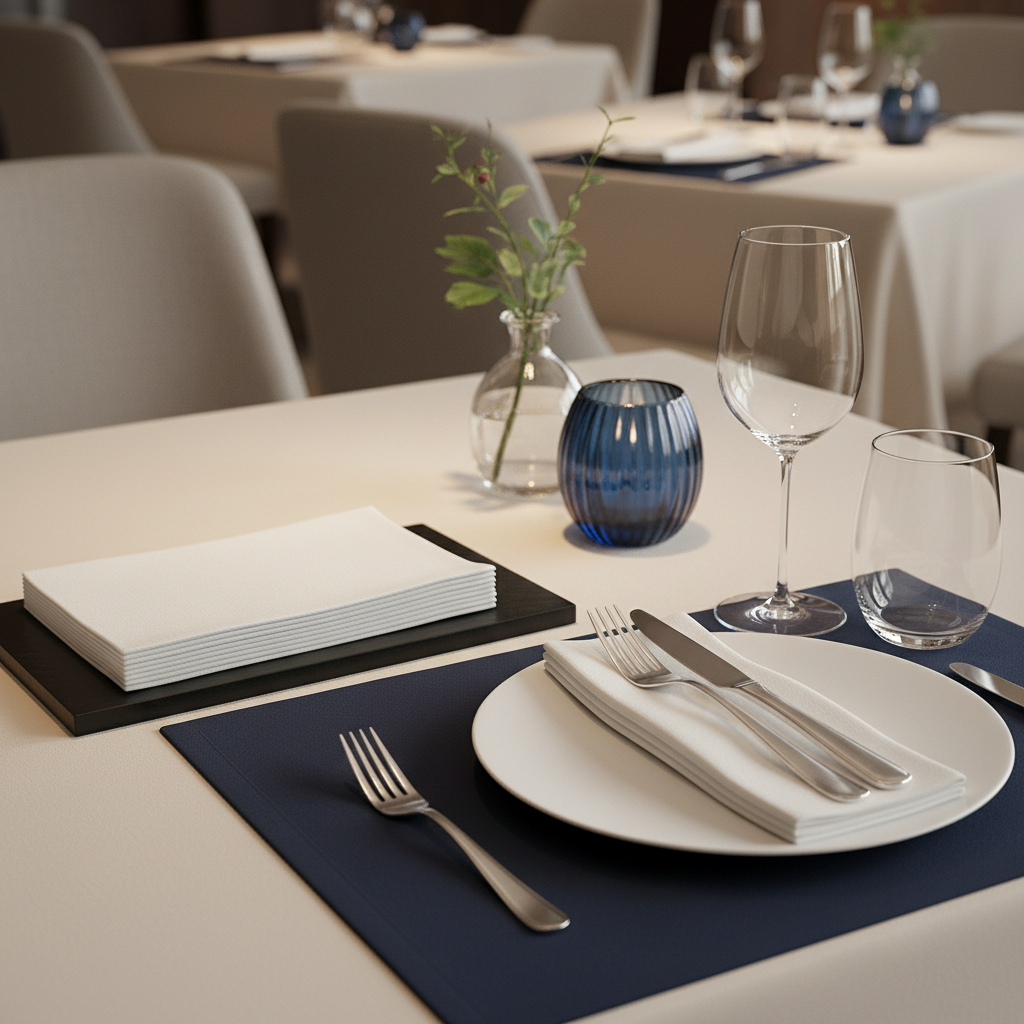
For fine dining establishments, banquet spaces, and premium hotels, the choice of tableware is a balance between guest experience and operational costs. The napkin, being the primary touchpoint that stays with a guest throughout a meal, holds significant visual and tactile weight. Traditionally, the choice was binary: premium fabric linen or cheap multi-ply paper. Today, luxury disposable napkins, often referred to as linen-feel napkins, have emerged as a high-performance alternative.
"Tableware represents the silent voice of your hospitality. If the touchpoint fails, the premium dining impression fails."
Evaluating the Material: Linen vs. Paper vs. Airlaid
To understand what makes a napkin feel premium, we must evaluate the structure of the material. Standard paper napkins are made from wet-laid tissue. When exposed to food oils or condensation, wet-laid tissue loses its structure, sheds lint, and lacks weight. Fabric linen, while conveying premium texture, requires sorting, washing, chemical treatment, ironing, and replacement due to permanent wine or oil stains.
Premium disposable cloth-like napkins are manufactured using a dry-laid (air-laid) process. Instead of bonding wood fibers with water, airlaid cellulose utilizes air currents to place virgin fibers in a dense, uniform structure. This structure is then bonded with food-contact-safe binders, creating a material that inherits the heavy drape, soft feel, and visual appearance of woven fabric.
B2B Material Comparison Matrix
| Performance Metric |
Woven Linen Cloth |
Standard Paper Tissue |
Linen-Feel Airlaid (SILQUE) |
| Visual Texture |
Premium weave, heavy drape |
Casual, flat, thin |
Matte weave pattern, clean folds |
| Tactile Feel |
Soft, substantial weight |
Stiff or flimsy, light weight |
Soft, thick, cloth-like weight |
| Absorbency Rate |
Medium (saturates slowly) |
Low (tears when wet) |
High (holds up to 6x its weight) |
| Lint & Residue |
Low (if starched correctly) |
High (leaves white dust on clothing) |
Zero (clean, dust-free cellulose) |
| Operational Cost |
High (laundry, replacement, loss) |
Low (bulk commodity pricing) |
Predictable (per-guest single use) |
Operational Cost Calculator: Linen vs. Linen-Feel
While fabric napkins are reusable, their lifetime cost includes several hidden operational charges that procurement teams must factor in:
- Laundering Overhead: Offsite washing, transport, chemical stain removal, and professional pressing fees per cycle.
- Loss & Staining Rate: Up to 15% of fabric stock is lost monthly due to permanent lipstick, wine, curries, grease stains, or guest pilferage.
- Inventory Holding: To support a restaurant with 100 seats, you need at least 300-400 linen napkins in inventory to cover the wash-service-dining cycle.
- Setup Time: Ironing and checking for lint or holes takes significant staff prep time before shifts.
By switching to premium luxury disposable napkins, a restaurant eliminates the unpredictability of laundry contracts and replacement fees. Each napkin has a fixed unit price, allowing finance teams to calculate the exact cost-of-service per guest cover.
Checklist for Selecting Premium Table Napkins
When sourcing disposable cloth-like napkins for your venue, ensure you evaluate the following specifications:
- Verify the Weight (GSM): Premium napkins sit between 60 to 75 GSM. Anything below 55 GSM behaves like standard paper; anything above 80 GSM can feel overly stiff and difficult to fold.
- Assess the Softness and Creasing: A true linen-feel napkin will fold cleanly without tearing or forming sharp, paper-like creases. It should drop naturally over the guest's lap.
- Confirm Food-Safety Binders: Ensure the binders used in the dry-laid process are certified safe for food contact, especially if napkins wrap cutlery or rest directly on bread baskets.
- Choose the Color Theme: Stick to neutral hospitality standards (Ivory, White, Charcoal, Champagne) or choose rich signature colors (Burgundy, Navy) to match the table setting and brand layout.
If you are looking to elevate your restaurant or banquet cover presentation while keeping service costs predictable, request a physical sample kit. Touching the material is the best way to verify the linen-feel quality before bulk procurement.