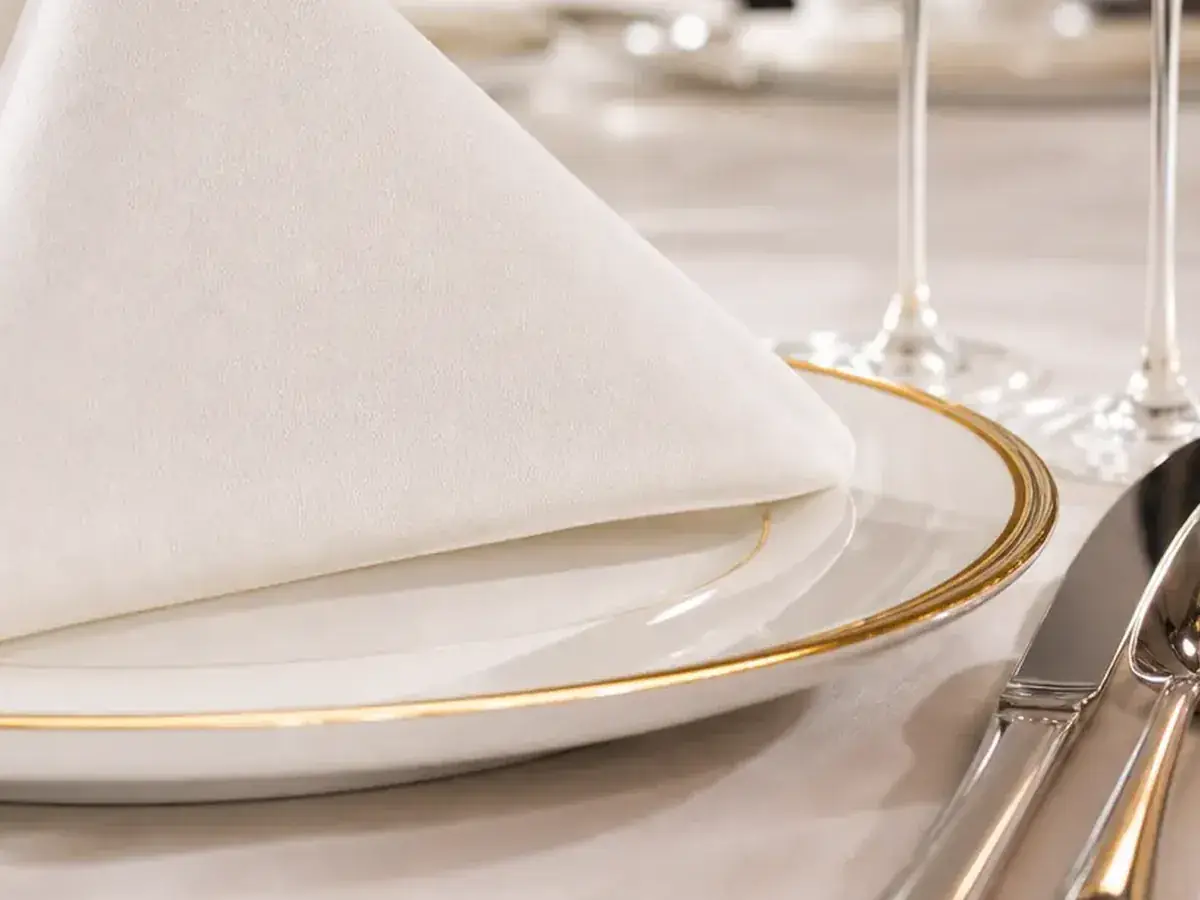
Navigating hospitality supply chains requires balancing strict quality standards with cost-efficiency and delivery schedules. In the purchase department of a hotel or restaurant group, sourcing custom tableware is a complex task. Selecting a reliable **restaurant napkin supplier** who understands the hospitality cycle, MOQ thresholds, custom layout approvals, and local delivery grids is key to preventing table service disruptions.
"Procurement is not just about the lowest unit cost. It's about supply security. A restaurant with no napkins is a restaurant with closed doors."
1. Specifying the Sourcing Requirements
Before initiating contact with a **hotel napkin wholesale supply** representative, F&B managers should clearly define their table requirements to receive an accurate, speed-optimized quote:
- Service Formats: Specify whether you require 8x8 cocktail napkins for lounges/welcome drinks, 16x16 dinner napkins for main covers, or prefolded pocket cutlery napkins for buffet lines.
- Branding Layout: Determine if you need plain white/colored stock or custom printed branding. Brand logos can be applied using flexographic inks (up to 2 colors), hotfoil stamping for a metallic sheen, or custom embossing.
- Quantity Thresholds: Calculate your monthly napkin consumption. Establishing regular repeat orders ensures consistent inventory levels in the supplier's warehouse, preventing dispatch delays.
2. Sourcing Checklists: MOQs & Print Approvals
For custom printed napkins, the sourcing cycle involves layout approvals and setup charges. Here is the typical procurement workflow to expect:
- Artwork Submission & Die Prep: The procurement team submits vector brand assets (AI, PDF, or EPS format). A stereo plate or hot-stamp die is manufactured based on the exact napkin dimensions.
- Mockup & Sample Approval: A digital mockup or physical sample strip is prepared showing logo placement, margins, and ink colors. The procurement head signs off on the proof before production.
- MOQ Compliance: For standard, unbranded napkins, orders can be dispatched in smaller case quantities. For custom branded configurations, the Minimum Order Quantity (MOQ) begins at 10,000 pieces per format to distribute the machinery setup and die-making overheads efficiently.
3. Logistics, Lead Times & Warehousing
Relying on imported stock (such as commodity Chinese shipments) exposes procurement to global shipping delays, port clearances, and erratic pricing. Sourcing from a local supplier with local manufacturing and warehousing offers a more secure alternative:
- Lead Times: Customized orders, including layout approval, plate manufacturing, printing, folding, and packaging, are completed and ready for dispatch in 7 to 10 days.
- Local Warehousing: SILQUE maintains a dedicated warehouse in Bangalore. This local buffer stock allows us to support repeat accounts with immediate, door-to-door delivery within 24-48 hours during emergency banquet rushes.
- Food-Safety & Compliance: Verify that the supplier's materials are clean, odorless, lint-free, and manufactured under hygienic conditions. B2B orders should include detailed tax invoicing, GST compliance, and transport documentation.
To establish a wholesale supply relationship, procurement teams can request sample kits containing different colors, weights (60-75 GSM), and formats. Evaluating the materials in hand ensures F&B staff can confirm the linen-feel quality before establishing long-term contracts.